
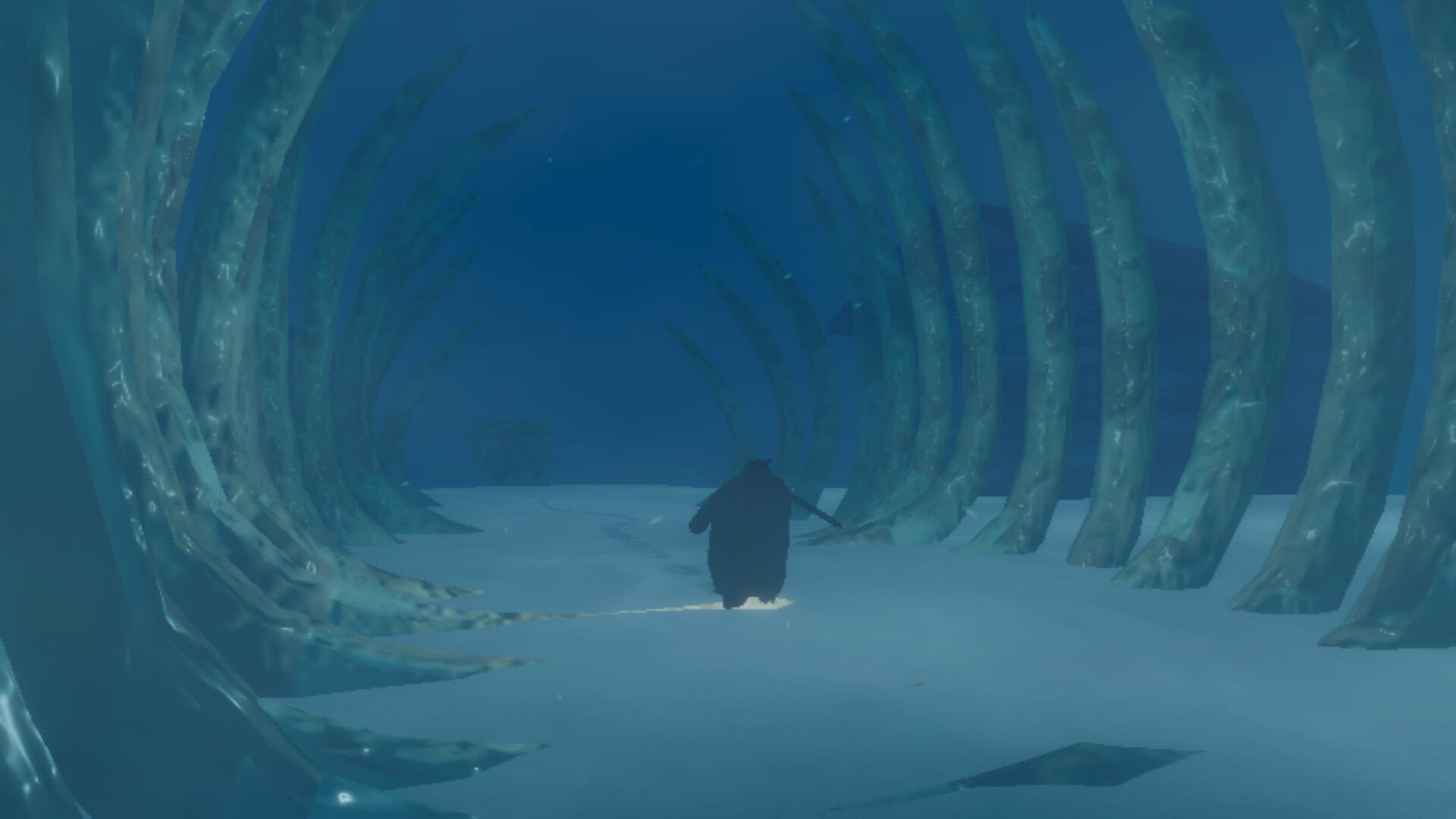
Expect exploration rather than colony management
The game’s title refers to the penguins whose home is being visited by the human expeditions. The publisher describes a slow-burning horror adventure seen through those animals, not a resource-production settlement simulator. Keeping that premise in mind prevents advice from unrelated penguin games from setting the wrong expectations.
The official emphasis is on moving through and observing the Antarctic environment. You follow traces of human arrivals and encounter narrative context rather than receiving a verified building-and-economy tutorial in this research. The starting guide explains that perspective before discussing more focused movement questions.
Notice which penguin you are using
The demo accounts describe different penguins being suited to different physical situations. No Escape discusses switching when the current penguin is ill-suited to progress. Nintendo World Report independently describes differences between chicks and emperors.
The practical lesson is to consider body size and movement when interpreting an obstacle. It is not a claim that the game has a documented best species for every situation. A source-backed trade-off is more useful here than an invented ranking that ignores the particular passage you are trying to approach.
Keep the chick’s advantage and limitation together
Both collected accounts identify small chicks as capable of fitting through narrow spaces. They also distinguish their inability to swim from the abilities of larger penguins. That paired observation is a specific demo tip rather than a generalized claim that small bodies are always better.
It helps explain why a choice suited to a gap may be unsuitable when the route involves water. The material does not establish every safe crossing or a tested map of hazards. This page therefore gives the documented contrast without extending it into an unverified route guarantee.
Use the flare as orientation, not a complete checklist
The firsthand preview describes a red flare and subtle environmental direction. Those details provide an opening landmark for a player trying to understand where attention is being drawn. They do not supply a verified order for every discovery in the game.
The walkthrough pages explain the recorded opening approach at greater length. They distinguish an initial direction from a tested mandatory sequence through the full campaign. That is useful if you want help getting started while preserving the exploratory nature described in the official introduction.
Give discoveries their own space
The demo material describes story context emerging through artifacts and word-bearing discoveries. The publisher also points to abandoned equipment and expedition traces in the environment. Those sources establish why observing surroundings is relevant to more than physical navigation.
They do not establish a required collectible count or an authenticated complete translation. The secrets page therefore explains the discovery mechanism without telling you that every clue must be solved before moving on. The story page gives a separate introduction to the premise for readers who want context without alleged ending spoilers.
Use focused answers for the next question
If the problem is movement, the controls and stamina articles explain the documented actions and qualitative trade-offs. If the problem is orientation, the exploration guide covers the landmarks and observations in the collected material. Those questions can be addressed without inventing a skill build or a guaranteed quickest path.
If the question concerns saving, the available evidence is narrower and only confirms the Steam Cloud feature. If it concerns an ending or a full completion time, the current research does not establish a reliable final answer. The relevant pages say that directly, so a beginner does not mistake an unsupported promise for a practical instruction.