
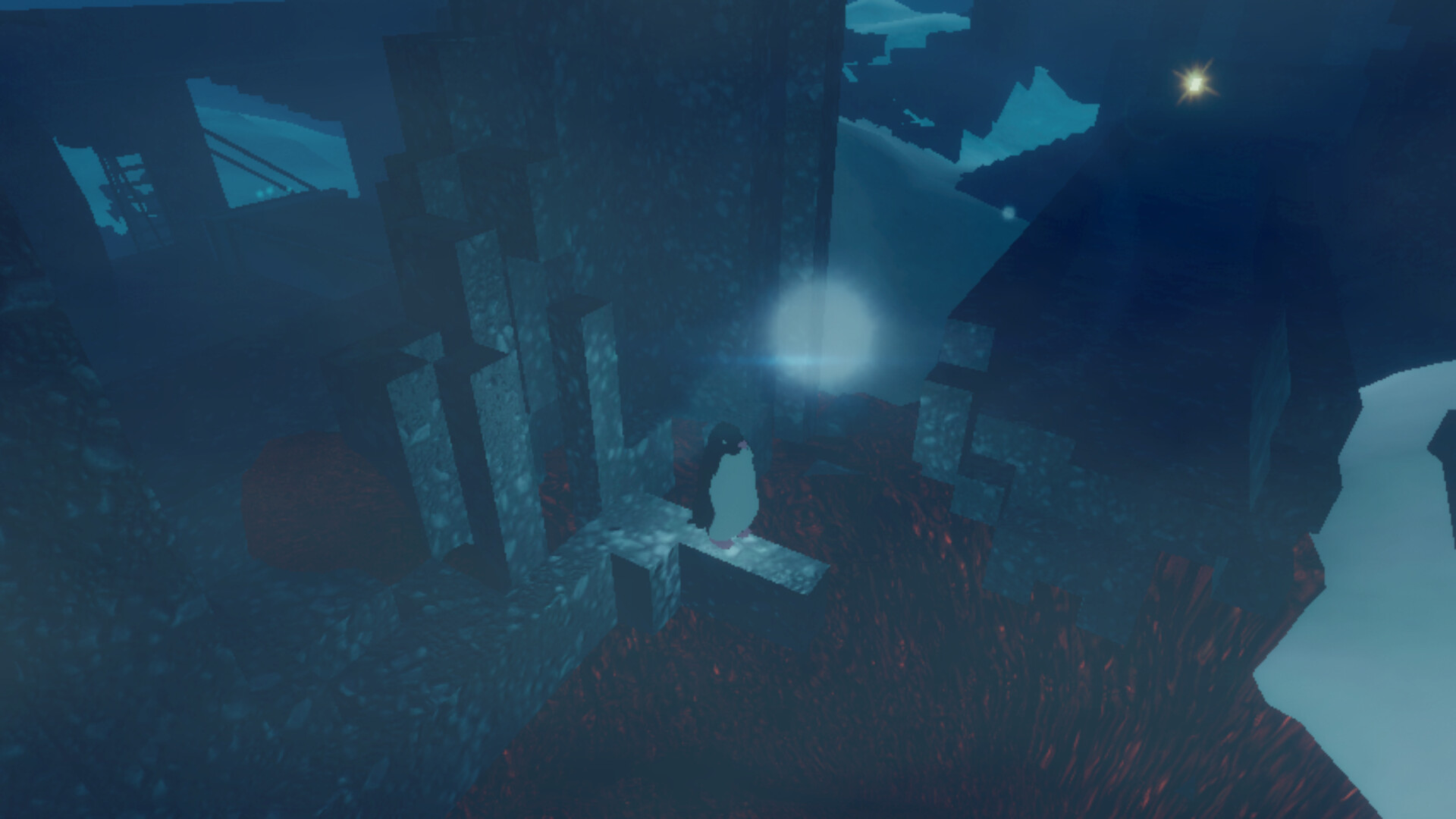
Antarctica in 1939
The year and location are explicit parts of the official premise. They situate the human arrivals in an Antarctic landscape already inhabited by the penguins. That combination gives context to both the expedition narrative and the viewpoint through which it is observed.
Gematsu’s story-trailer coverage reproduces the publisher’s overview of that setup. It is useful published corroboration of how the game was introduced, rather than an independent account of the full campaign. This explanation therefore uses it for the premise it actually documents.
The ancient presence creates the central conflict
Two human groups arrive in response to something ancient beneath the ice. Their shared interest does not make their purposes compatible. The official description makes the contrast between exploitation and protection central to the conflict.
The Nazi expedition seeks to harness a power it does not understand for its own destructive aims. The Kaitiaki carry a responsibility to return that presence to sleep. Those are confirmed motives, while the eventual outcome remains outside the reliable ending evidence collected for this site.
Why you see the story as a penguin
The local penguins provide the playable viewpoint instead of a member of either human expedition. The publisher describes following the humans and witnessing the strain on their minds. That places the player close to the human story without simply equating the penguin perspective with the explorers’ ambitions.
The contrast is part of the official framing of human intrusion into an existing home. It explains why curiosity and observation are so prominent in the premise. It does not establish a human-style allegiance choice or a faction reward system, neither of which was verified in the collected material.
Obsession and the desire to conquer the unknown
Fellow Traveller explicitly connects the story with obsession, colonialism and arrogance toward the unknown. These are stated thematic concerns rather than a theory invented by this guide. They give the opposing motives a wider meaning than two groups merely racing toward a destination.
That context can help a reader understand why the search for ancient power is not presented as a neutral adventure objective. It still does not establish the meaning of every symbol or the exact message of a later scene. This page separates the official framing from interpretations that would need additional scene-level evidence.
The Lovecraft relationship is a reimagining
At the Mountains of Madness and The Shadow Out of Time are named influences in the official material. The game is described as an expansion and reimagining of the mythos rather than a promise to follow one story word for word. That description is important when comparing familiar literary ideas with the game’s specific perspective.
A reader should therefore not assume that every character, event or resolution from the fiction appears unchanged here. The collected sources establish inspiration, not a complete correspondence between book and game. Using the literary ending to fill an unverified gap in the game’s story would cross that boundary.
How the demo delivers pieces of context
No Escape’s firsthand account describes narration and environmental discoveries during the demo. That supports an understanding of the story as something encountered through exploration rather than only through a compact plot summary. The account also distinguishes its own future-game expectations from what was observed.
The secrets and exploration pages explain the documented clue systems without supplying an unverified full translation. The factions page concentrates on the two expeditions’ goals. The ending page remains separate because explaining the confirmed setup is not the same as possessing reliable evidence for the campaign’s final events.