
Know the perspective before looking for objectives
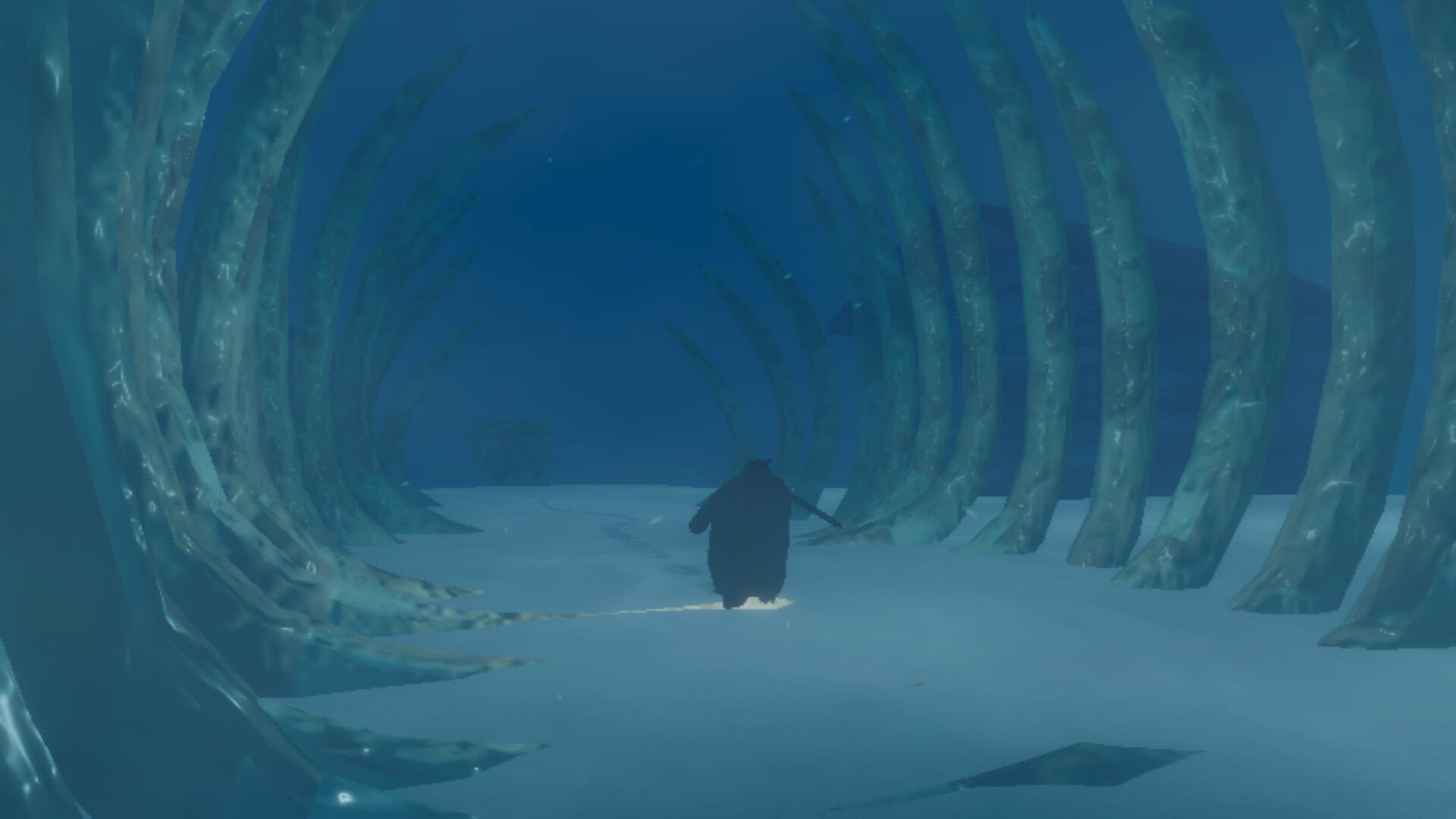
You experience the Antarctic setting as a penguin watching human expeditions arrive and investigate. That viewpoint is central to the publisher’s explanation of the game rather than a cosmetic change to an ordinary human adventure. It connects everyday movement through the ice with observation of a story unfolding around you.
The official description emphasizes exploration without a prescribed order. A useful starting mindset is therefore to look for environmental context rather than expect this guide to provide an authenticated list of compulsory tasks. That is a reading of the stated design, not a claim that every possible route has been tested.
Learn what changing penguins is for
Independent demo accounts describe moving between penguins with different suitability for the terrain. This is relevant when the obstacle in front of you is about body size or movement rather than a missing story answer. The published observations give a concrete reason to pay attention to which penguin you currently inhabit.
Small chicks are described as fitting narrow openings, while larger penguins have different strengths. The reports do not establish that one species should replace every other choice for an entire run. This guide therefore treats penguin selection as a response to the immediate situation rather than a fixed character build.
Keep movement actions separate from button assignments
Game Informer’s demo account describes waddling, belly sliding, swimming and hopping. Those observations establish the kinds of movement seen in the preview. They do not establish a universal keyboard layout or a controller mapping for every supported device.
If your immediate question is which physical key performs an action, the collected research cannot supply a verified table. The controls article makes that limitation explicit instead of assigning familiar PC keys by assumption. Use the prompts and settings in your installed build for the actual configuration you are playing.
Use the opening landmark without overreading it
The distant flare appears in the publisher’s introduction and in firsthand demo coverage. It is a useful orientation cue for understanding why the opening draws attention toward the expedition. Its role as a landmark does not turn the wider exploratory game into a documented single-route puzzle.
The walkthrough explains this opening at greater length and distinguishes it from a tested retail campaign guide. The demo walkthrough focuses more narrowly on the published preview approach. That division keeps a broad starting guide from repeating a route it cannot fully authenticate.
Read discoveries as story context
No Escape’s firsthand demo account discusses artifacts and word-bearing discoveries encountered during exploration. Those observations show why looking around can add context beyond simply moving toward a landmark. They do not prove a complete translation, a total collectible count or a required set for a particular ending.
For a spoiler-light start, the useful distinction is between recognizing that a clue system exists and reading an asserted solution to it. The secrets article describes the documented mechanism while withholding unsupported decoding. The story article separately explains the official premise, so understanding the setting does not require accepting a fan theory.
Choose a focused guide for your next obstacle
Use the stamina article when the question concerns the qualitative movement trade-offs reported in the demo. Use the exploration article when you want to understand environmental cues and how discoveries contribute context. Use the controls article when you need to distinguish documented actions from the input mappings still awaiting verification.
This hub does not add an unverified combat build, skill tree or resource-management system to make the game sound more familiar. It organizes the documented questions around the experience described by the official material and the demo writers. That gives you a starting point grounded in the actual evidence rather than a generic template for a different kind of game.