
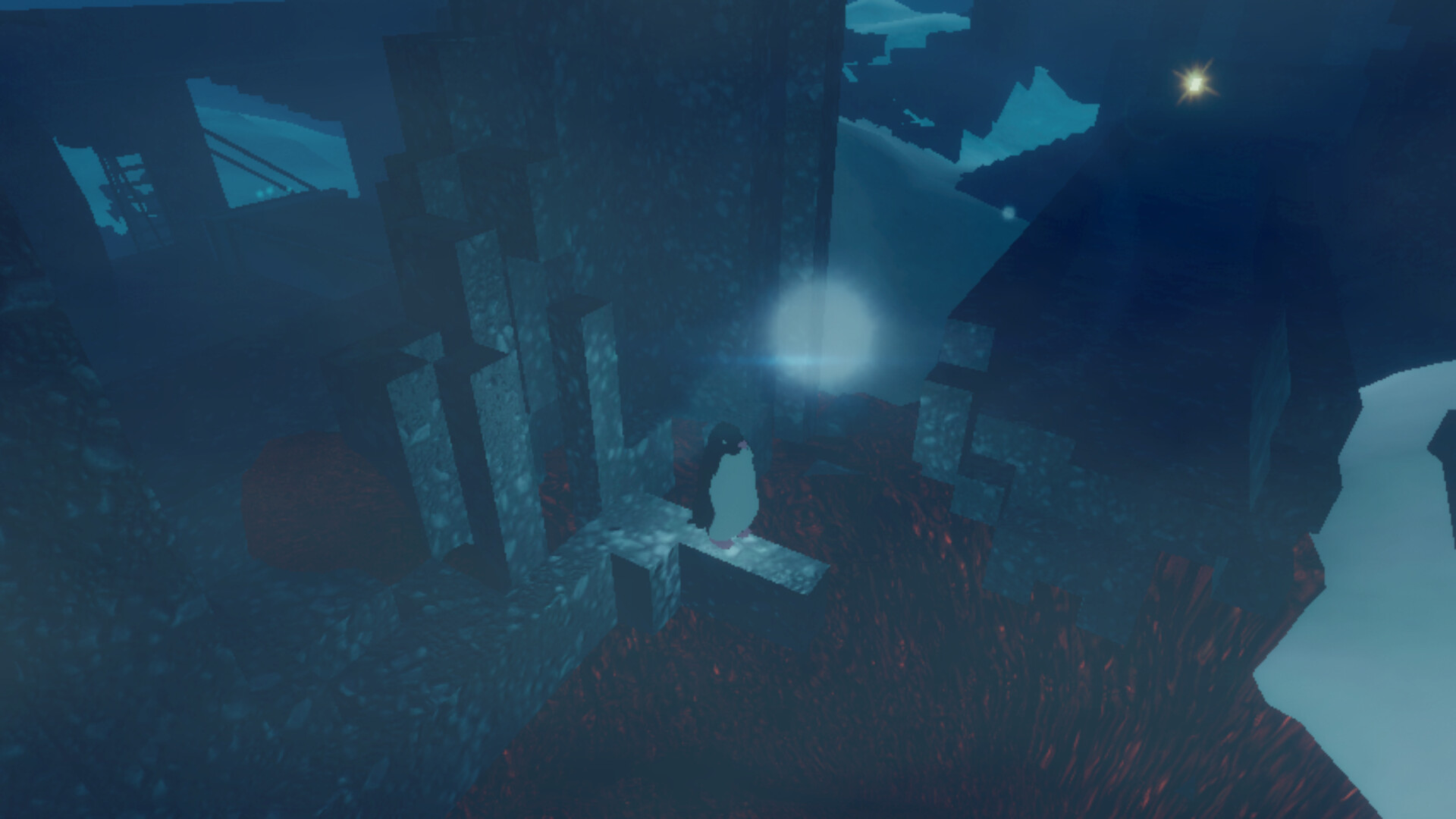
The official connection
The Steam description introduces the game as cosmic horror through the eyes of a penguin and names At the Mountains of Madness as its main source. It is narrated by Lenval Brown and listed under the Shadows of Madness franchise label. The developer is ORIGAME DIGITAL, the studio behind Umurangi Generation, with Fellow Traveller publishing.
MonsterVine's launch report lists further influences: John Carpenter's The Thing, David Lynch and experimental PlayStation 2-era horror. Those references help explain the lo-fi look and the dreamlike imagery. The Lovecraft novella remains the clearest narrative template.
What happens in the original novella
Lovecraft wrote At the Mountains of Madness in early 1931, and Astounding Stories serialized it in 1936. Geologist William Dyer of Miskatonic University recounts an Antarctic expedition that finds the ruins of a vast alien city behind an enormous mountain range. Murals reveal the history of the Elder Things and the shoggoths they created as servants.
Dyer narrates to warn a new expedition away from the continent. His companion Danforth is driven mad by something glimpsed beyond the mountains. The story is a cornerstone of cosmic horror and has inspired comics, films and earlier games.
Why penguins are part of Lovecraft's story
Penguins are not an invention of the game. In the novella the explorers meet blind, six-foot-tall albino penguins wandering calmly in the tunnels beneath the dead city. The story suggests they were once kept by the Elder Things, and later the shoggoths prey on them.
Penguin Colony takes those background animals and makes them the viewpoint. Instead of scientists interpreting the ruins, you waddle, slide and swim past human visitors who never think to ask what the penguins have witnessed. That inversion is the heart of the game's twist on its source.
What Penguin Colony changes
The game is set in 1939, and two human expeditions arrive rather than one academic team. MonsterVine describes a Nazi expedition seeking an ancient power to validate its ideology and a Kaitiaki expedition trying to stop it and return the entity to its slumber. You observe this conflict rather than commanding it.
Reviewers read the colony mechanic, in which you switch between many penguins, as a response to that ideology. The Wand Report also credits an Indigenous Māori perspective as a meaningful addition to the Lovecraft framework. How those threads resolve is covered on our ending page, which contains spoilers.
Do you need to read the novella first?
No reading is required to play, and the game does not quiz you on Lovecraft's plot. Knowing the novella does add recognition value for the ruins, the murals and the sense of something ancient under the ice. Gamekult notes that fans of the author are the audience most likely to enjoy the short runtime.
If you plan to read it, the novella is short enough to finish in an evening. Reading it before playing preserves the order of discovery Lovecraft intended. Reading it afterward lets you spot what the developers kept, inverted or left out.